
The Moral of Claude Fable 5
Fable 5 was real, powerful, and useful. The reaction to it exposed a more important lesson: frontier intelligence is becoming permissioned infrastructure.
Jun 15, 2026·17 min read
AIPolicyAgentsSecurity
Thoughts on AI, building in production, and what actually works.
Fable 5 was real, powerful, and useful. The reaction to it exposed a more important lesson: frontier intelligence is becoming permissioned infrastructure.

Claude Fable 5 felt like a real frontier model in the least glamorous place possible: security hardening, UI polish, workflows, and small bugs other agent passes had missed.

Anthropic's Managed Agents workshop makes a practical point concrete: real agent work depends on evolving harnesses, durable sessions, event logs, tool boundaries, context, and explicit outcomes.

The most important design decision in most AI systems is not what the agent does. It is exactly where, when, and how human judgment enters the workflow.

Prompting and basic tool use are no longer the differentiator. A new set of higher-order skills has emerged for the people getting real, compounding returns from AI systems.
The real cost of AI workflows isn't building them. It's the continuous, unglamorous work required to keep them from quietly rotting.
Pi clicked for me because it treats the coding agent as a configurable local system: models, MCP, themes, extensions, hooks, and skills all live close to the work.
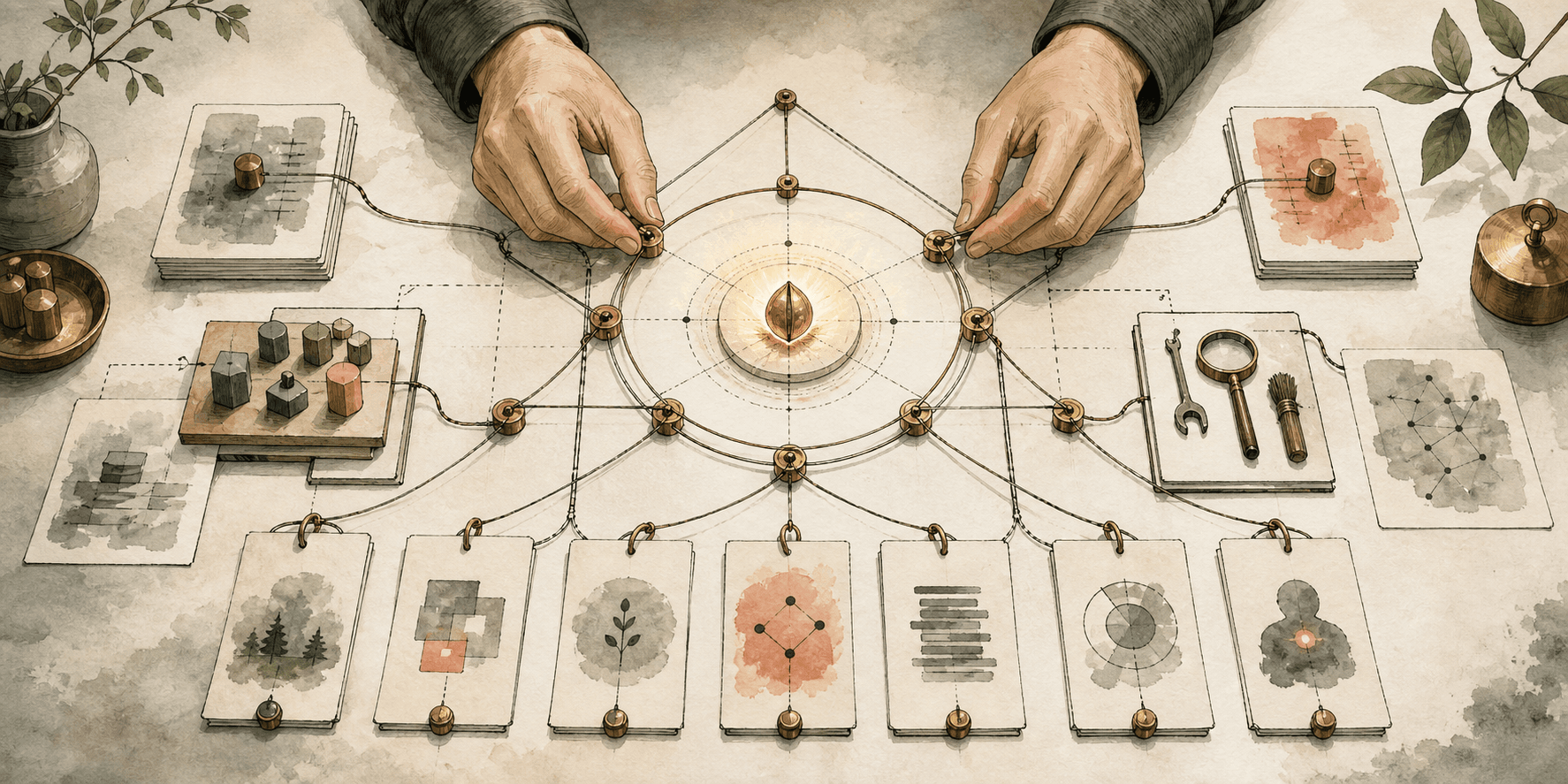
Anthropic's large-codebase Claude Code guide makes a familiar point concrete: agents need context, tools, maintenance, and ownership around them before they can do serious work.

A lot of AI usage is still trapped in manual chat loops. The real step change happens when systems respond to events, schedules, and workflow state instead.

Most people are not behind because they are lazy. They are behind because the AI stack is fragmenting faster than the explanations are improving.

Your biggest career risk right now is not AI — it's refusing to adopt it. Here's what's actually happening in production across 20+ businesses.

A lot of teams are still overbuilding around the word agent. The real leverage usually comes from repeatable capabilities: workflows, context, tools, memory, and guardrails.

AI agent has become one of those terms that gets used so often it starts to lose meaning. Here's a cleaner mental model for what agents actually are and why they matter.

Useful AI memory is not about a model mysteriously remembering you. It is about deciding what is worth saving, where it should live, and when it should be written.
A practical guide to using Claude Cowork for real business automation — inbox triage, analytics, recruitment, and more. No code required.

Most teams still overfocus on model choice. In practice, better results usually come from better context, cleaner workflows, and stronger system design.
How intelligent automation is reshaping the enterprise landscape — and why most companies are still getting it wrong.